The Great African Takeover: Why CAF is Ruling the 2026 World Cup Group Stage
28 Jun, 2026
The Great African Takeover: Why CAF is Ruling the 2026 World Cup Group Stage
The script of international football is being aggressively rewritten across North America. For decades, the narrative surrounding African football at the FIFA World Cup followed a familiar, patronizing rhythm: immense raw talent, unmatched passion, but ultimately derailed by tactical inconsistency or administrative heartbreak.
Fast forward to the summer of 2026, and that old playbook has been completely incinerated.
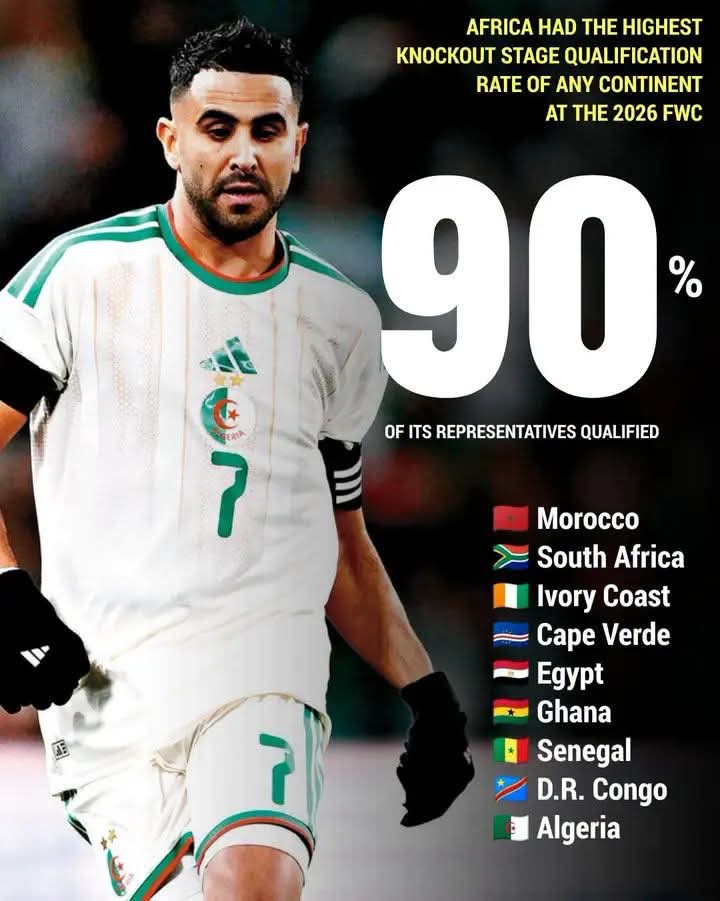
As the curtain closes on the newly expanded 48-team group stage, one statistic stands above the rest, reverberating from Mexico City to Vancouver: With an impressive 90% qualification rate, Africa's football teams deliver the highest knockout stage qualification rate of any continent at the 2026 FIFA World Cup!
Out of the historic 10 African nations that crossed the Atlantic, a staggering 9 are marching on to the Round of 32.
The Elite Vanguard: Powerhouses Solidifying Dominance
The charge into the knockout rounds was spearheaded by a mix of historical heavyweights and newly crowned continental kings who treated their groups not as a test, but as an announcement.
Morocco: Carrying the torch from their legendary semifinal run in 2022, the Atlas Lions proved it was no fluke. They effortlessly dismantled Group C, finishing tied on points with Brazil (7 points apiece) while displaying a defensive rigidity and midfield fluidity that looks ready for another deep tournament run.
Ivory Coast: The reigning African champions brought their signature continental swagger to the global stage. Escaping Group E alongside powerhouse Germany, the Elephants proved that their tactical discipline matches their explosive physical presence.
Egypt & South Africa: Both giants navigated highly volatile groups. Bafana Bafana safely secured passage out of Group A behind Mexico, while the Pharaohs of Egypt comfortably booked their ticket out of Group G without dropping a single match.
The New Guard and the Fight from the Brink
What truly pushes Africa’s qualification rate to an unprecedented 90%, however, isn’t just the expected victories of its elite. It is the depth of the continent’s representation.
Take Cabo Verde (Cape Verde). The Blue Sharks have become the ultimate romantic narrative of this tournament. Placed in a brutal Group H alongside European royalty Spain and South American masters Uruguay, the island nation refused to blink. Drawing all three of their group games, they finished undefeated, securing an automatic knockout spot and capturing the hearts of neutral fans worldwide.
Meanwhile, the drama reached a fever pitch for the teams fighting through the tournament's new 48-team format, where the best third-placed teams advance. Senegal, after a rocky start, found themselves needing a masterclass to keep their tournament alive. They delivered in spectacular fashion, dismantling Iraq 5-0 to radically fix their goal difference and secure their spot.
Joining them in the late-stage drama were nations like Ghana, Algeria, and DR Congo, each executing gritty, high-stakes tactical shifts in the final matchdays to ensure they wouldn't be left behind on the tarmac.
"The expansion to 9 automatic slots for Africa didn't dilute our quality; it finally gave our depth the platform it deserved. We aren't just happy to be here anymore. We are here to run the tournament." — Overheard from the celebratory raptures of the traveling African press corps.
A Changing of the Guard
The lone, somber note for the continent belonged to Tunisia, who became the only African side to fall at the first hurdle after a grueling campaign in Group F. But a
By sending 9 teams into the Round of 32, Africa has turned the 2026 World Cup into an expansive showcase of its tactical evolution. The narrative of the "underdog" is officially dead. As the knockout bracket begins, the rest of the world is realizing what Africa has known all along: the continent doesn't just play the game with soul—they play it to win.