The World Cup Quarter-finals Separate the Good From the Great
10 Jul, 2026
The World Cup Quarter-finals Separate the Good From the Great
The FIFA World Cup has reached that stage where reputations alone no longer win matches. Systems matter. Decision-making matters. One lapse, one tactical tweak, one moment of brilliance—and four years of preparation can disappear in an instant.
The latest quarter-final storylines have reinforced exactly that.
France continue to look every inch a champion. England have an injury dilemma that could reshape their defensive structure. Argentina stand one win away from another semi-final, but Switzerland represent far more than awkward opposition. And towering above it all is a familiar rivalry between two of football’s greatest modern icons.
France’s Machine Keeps Rolling
A 2-0 victory over Morocco looked straightforward on paper. It was anything but in its construction.
France controlled territory, patiently manipulated Morocco’s compact defensive block and eventually broke resistance through the quality of Kylian Mbappé and Ousmane Dembélé. Mbappé even recovered from a missed first-half penalty to score before creating the second goal, underlining why elite forwards are judged by resilience rather than perfection.
Didier Deschamps’ side rarely looked rushed.
That is their greatest strength.
They are comfortable defending in a medium block, equally comfortable dominating possession, and perhaps the most devastating transition side left in the tournament.
The midfield pairing consistently prevented Morocco from progressing centrally, forcing attacks wide before France’s athletic back four squeezed the space.
This wasn’t spectacular football.
It was tournament football.
The kind that wins World Cups.
France have now reached another semi-final while keeping clean sheets throughout the knockout rounds, demonstrating a defensive discipline that complements their attacking talent.
Mbappé’s goal also carried historical significance. His tournament tally drew him level with Lionel Messi in the Golden Boot race, while his appearance matched another landmark in French World Cup history.
England’s Biggest Battle May Come Before Kick-off
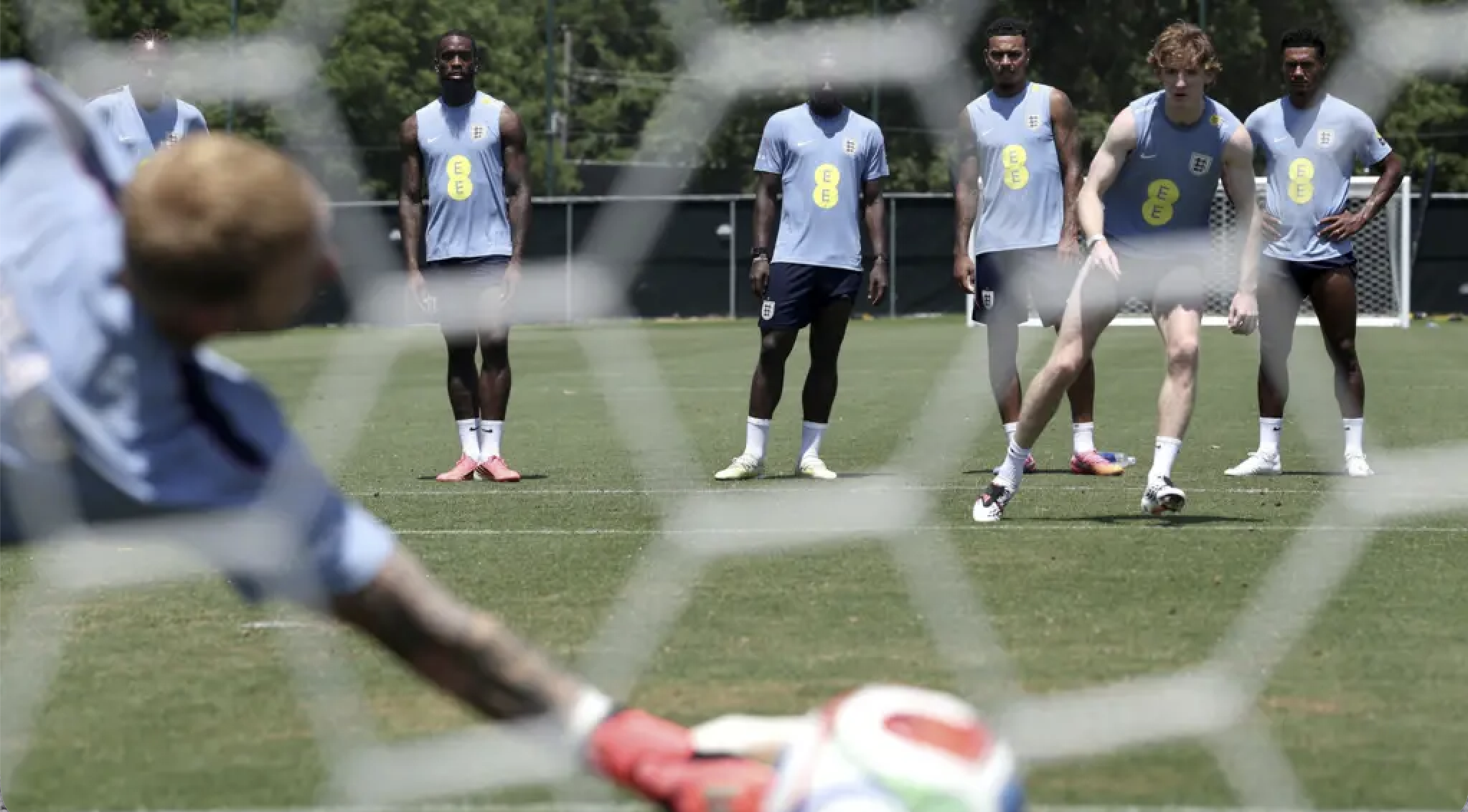
England’s preparation for Norway has been dominated by uncertainty surrounding Marc Guéhi.
Should the defender fail to recover in time, Thomas Tuchel—or whichever tactical staff member is overseeing the defensive setup—faces a genuine structural decision rather than simply replacing a player.
Guéhi’s calm distribution has been fundamental to England building attacks from the back.
Remove him and England lose more than defending.
They lose rhythm.
Against Norway, rhythm matters.
Everything starts with Erling Haaland.
The temptation is always to focus exclusively on stopping the Manchester City striker, but Norway are dangerous because Martin Ødegaard creates the spaces Haaland eventually attacks.
England therefore face two simultaneous problems.
Do they commit an extra midfielder to limiting Ødegaard’s passing angles?
Or do they maintain numerical superiority against Haaland inside the penalty area?
Trying to solve both often means solving neither.
England have scored freely during the tournament, but Norway eliminated Brazil by staying compact before striking decisively in transition. That blueprint should ensure England dominate possession without ever feeling entirely comfortable.
Argentina Against Switzerland Is More Complicated Than It Looks
On reputation alone, Argentina begin favourites.
On tactics, this contest is considerably closer.
Switzerland remain among Europe’s most disciplined defensive sides, typically compressing central areas before springing forward through quick vertical combinations.
Argentina’s challenge will therefore be patience.
Expect periods where Lionel Messi drifts deeper than usual to overload midfield and drag Swiss markers away from their defensive line.
That movement creates the channels runners exploit.
The supporting cast becomes just as important as Messi himself.
Switzerland, meanwhile, know they cannot simply absorb pressure for 90 minutes.
Their full-backs must advance selectively to stretch Argentina horizontally.
If they remain pinned back, Argentina will establish territorial dominance that becomes increasingly difficult to reverse.
This is the kind of knockout fixture where possession statistics can be misleading.
The decisive metric may instead be transitions won within five seconds of losing the ball.
That is often where quarter-finals are decided.
The Rivalry That Defines This Generation
One of football’s enduring narratives continues to evolve.
Mbappé versus Messi.
Different generations.
Different footballing personalities.
Yet remarkably similar influence.
Mbappé’s recovery from that missed penalty illustrated elite mentality. Rather than retreat emotionally, he demanded more responsibility, eventually producing both a goal and an assist.
Messi, meanwhile, continues to orchestrate Argentina’s attacking rhythm, proving once again that influence isn’t measured purely through pace or physicality.
Whether the tournament eventually delivers another meeting between the two remains uncertain.
What is certain is that both continue setting standards others struggle to reach.
GameDayBuzz Africa Watchlist
For GameDayBuzz users, the margins have never been finer.
Watch England’s first 20 minutes against Norway. If the press functions cleanly despite any defensive reshuffle, England will likely control the contest.
Watch Argentina’s midfield spacing. If Switzerland successfully deny central combinations, frustration could become a genuine factor.
And watch France.
Because right now, they look like the tournament’s most complete side.
Not because they always produce fireworks.
Because they rarely give opponents hope.
That’s the hallmark of champions—and exactly the sort of detail worth weighing before making your next prediction inside GameDayBuzz.