Contrasting tactical tests anticipated in Nations Championship round two
10 Jul, 2026
Contrasting tactical tests anticipated in Nations Championship round two
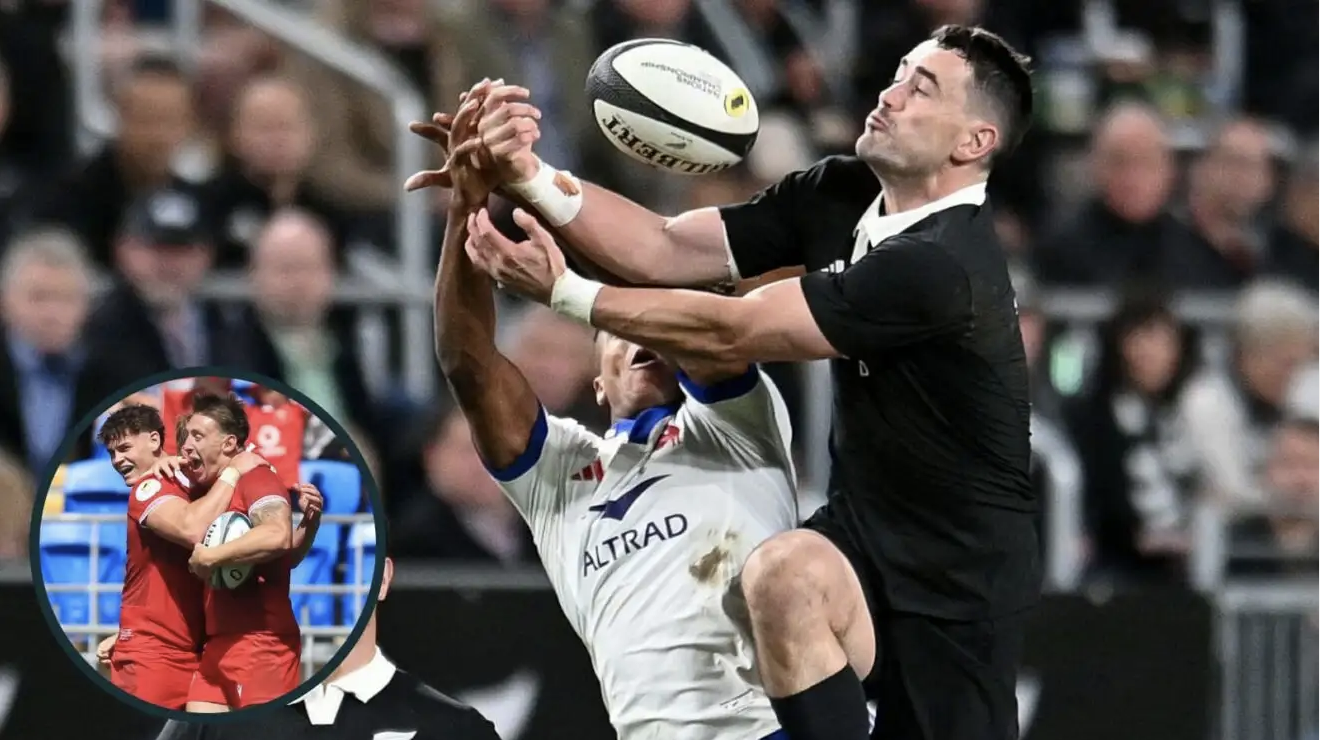
Round two of the inaugural Nations Championship brings three fixtures that should reveal far more than the table alone. New Zealand host Italy in Wellington, South Africa meet Scotland in Pretoria, and Australia take on France in Brisbane on Saturday, 11 July 2026, with all three matches carrying early weight in a competition built around short windows and little room for drift. After the opening round, the All Blacks edged France 34-32, the Springboks beat England 45-21, Scotland won 47-38 in Argentina, Australia fell 33-31 to Ireland, France lost narrowly in Christchurch, and Italy were beaten 27-10 by Japan. The shape of this second weekend is therefore clear: New Zealand and South Africa are chasing momentum, while Australia and France are both trying to correct details quickly in a match that already feels pivotal.
New Zealand v Italy
New Zealand against Italy is the earliest game of the day and, on the surface, the most straightforward. The All Blacks have won all 17 previous Tests against Italy and this will be their first meeting in Wellington. Yet the tactical interest lies in whether New Zealand can turn last week’s broken-field threat into a more complete 80-minute performance against an Italian side that remains dangerous when it can hold shape through midfield. The All Blacks made the most metres in contact of any side in round one, with 233, and much of that came from their ability to win collisions and then accelerate immediately through support lines close to the ball. Will Jordan scored twice against France and moved to 47 Test tries, while Cam Roigard also crossed twice, underlining how quickly New Zealand can punish defensive disconnects around the ruck and in the wider tramlines.
Dave Rennie has kept a strong spine but still altered the side meaningfully. Tyrel Lomax returns to start and reaches his 50th Test, Tupou Vaa’i comes back at lock, Wallace Sititi starts in the back row, and the midfield shifts to Jordie Barrett with Billy Proctor. Leroy Carter starts on the left wing, while Anton Segner and Josh Moorby are in line for debuts from the bench. That selection points to a plan built around pace of recycle, kick pressure and fresh legs rather than simple conservatism. The most important feature for keen watchers will be how New Zealand use Ruben Love at fly-half for a second straight start. Against France, New Zealand were at their most threatening when Love and Roigard moved the point of attack before French line speed could settle. If that rhythm returns, Italy may spend long periods turning and retreating.
Italy, however, are not built merely to absorb. Gonzalo Quesada has retained the Brex-Menoncello midfield pairing, with Paolo Garbisi and Stephen Varney again steering the half-back channel, while Tommaso Allan moves to full-back and Louis Lynagh comes in on the wing. Michele Lamaro captains a pack that includes Lorenzo Cannone and Ross Vintcent in the back row and Andrea Zambonin alongside Niccolò Cannone in the second row. The tactical issue for Italy is not mystery but execution. In Tokyo they were beaten 27-10 by Japan and struggled to impose themselves consistently through collision and territory. New Zealand’s own preview material has stressed that this Italian side is more advanced than old stereotypes suggest, especially after Italy finished fourth in the 2026 Six Nations and beat England 23-18 in Rome in March.
For Italy to stay alive here, the key is to avoid becoming fragmented. Watch for whether Brex and Menoncello can hold the gain line long enough for Garbisi to bring Allan and the wings into play, and whether Lamaro’s pack can slow Roigard’s service. If they cannot, the match risks becoming an end-to-end New Zealand exercise in width and transition.
South Africa v Scotland
South Africa against Scotland may prove the most physically revealing contest of the round. The Springboks opened with a seven-try 45-21 win over England at Ellis Park, while Scotland were just as productive in attack in a 47-38 victory over Argentina. Those returns matter because the raw numbers suggest this is not simply power against invention. In round one, South Africa and Scotland both scored seven tries, and they were the only two teams to average more than one point per possession, with Scotland at 1.34 and South Africa at 1.05. That sets up a tactical clash over which side can impose its preferred tempo first.
Rassie Erasmus has responded by making 10 changes to his starting side for Pretoria, continuing his policy of broadening involvement within the squad. Even with rotation, South Africa’s game plan is unlikely to move far from its foundations. Pieter-Steph du Toit captains again in the continued absence of Siya Kolisi and will win his 97th cap. The Boks will still want to squeeze the game through set-piece pressure, direct carrying and repeated contestable kicks that test Scotland’s backfield organisation and force exits under duress. The venue matters too. This is Scotland’s first match at Loftus Versfeld and only their second trip to South Africa in more than a decade, with their last away meeting there ending in a 55-6 defeat in Port Elizabeth in 2014. Altitude and defensive line integrity will be part of the story from the opening quarter.
Scotland arrive with genuine confidence rather than hope. Gregor Townsend’s side scored 47 in Cordoba and Sione Tuipulotu again gave them authority in midfield as captain, while their attacking shape against Argentina showed how quickly they can turn phase play into line breaks when their forwards tip short and their backs sweep behind. Their challenge in Pretoria is not to abandon that ambition but to protect it. South Africa punish loose exits, isolated carriers and narrow kick chases.
Keen fans should watch Scotland’s first three phases after set piece and turnover ball. If Ben White and Tom Jordan can move South Africa’s heavy forwards laterally before the line closes, Scotland can create the kind of fractured defensive pictures that suit Tuipulotu and their outside runners. If they are forced instead into slow, static ball, the Boks will herd them into a territorial match that becomes increasingly hard to escape.
Australia v France
Australia against France in Brisbane carries a different type of intrigue because both sides are close enough to believe small corrections will change the result. The Wallabies lost 33-31 to Ireland after pushing the game deep, while France were edged 34-32 by New Zealand in Christchurch. Round-one numbers offered one especially revealing clue: Harry Wilson and Yoram Moefana completed every tackle they attempted, 21 from 21 for Wilson and 19 from 19 for Moefana, and Moefana also led the field for dominant tackles with five. That points to a contest in which midfield defence and tackle completion could shape everything.
Joe Schmidt has made only two changes to the Australian starting XV, but one is decisive. Declan Meredith starts at fly-half for his Test debut, while Tom Wright is named at full-back. Harry Wilson continues as captain, with Fraser McReight and Rob Valetini flanking him in a back row built to win collisions and stay alive over the ball. Joseph-Aukuso Suaalii remains a central attacking reference point outside Len Ikitau, and Tate McDermott is held back as bench impact. The message in that selection is continuity, but also risk. Australia want to keep the energy and directness that troubled Ireland, yet they now entrust game management to a debutant against one of the best defensive systems in international rugby. What to watch is how Australia simplify the picture for Meredith: more pod runners off nine, more backfield kicking to turn France, or more early carries through Ikitau and Suaalii to shorten passing decisions.
France should again bring a side capable of squeezing opponents through structure even when personnel shifts. They have won the last three meetings with Australia, including the match in Paris last November, and Fabien Galthie was expected this week to fold in additional Top 14 finalists after the narrow loss to New Zealand. France’s round-one display still showed defensive bite and enough composure to stay within one score in Christchurch. Against Australia, their key route is likely to be familiar: disciplined kicking, heavy work at the contact area, and a midfield designed to close off easy second touches. If they can force Meredith into repeated exit decisions under pressure, the Wallabies may find themselves playing from long range too often.
Taken together, these three fixtures offer a clean tactical divide. New Zealand will look to stretch Italy before Italy can settle, South Africa will try to compress Scotland until the contest is played entirely on Springbok terms, and Australia must find a way to attack France without letting France dictate the emotional and territorial rhythm. For supporters searching for the real clues before the scoreboard settles, the answers will sit in the detail: ruck speed in Wellington, exit quality in Pretoria, and decision-making under pressure in Brisbane.