Spain beats Argentina after extra time to win 2026 World Cup Final!
20 Jul, 2026
Spain beats Argentina after extra time to win 2026 World Cup Final!
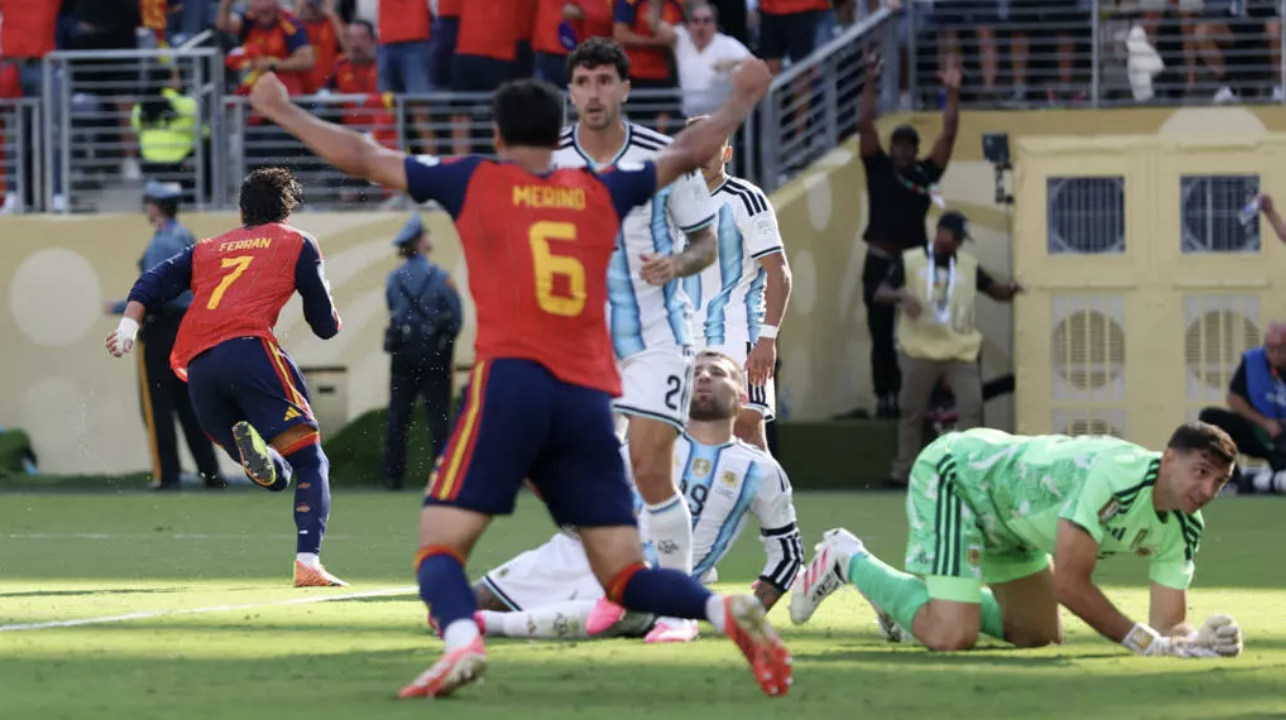
Spain are world champions again after Ferran Torres came off the bench to score the goal that settled the 2026 FIFA World Cup final, beating defending holders Argentina 1-0 after extra time in East Rutherford on Sunday.
The decisive moment arrived in the 106th minute at New York New Jersey Stadium, where a final that had been defined by tension, discipline and narrow margins finally cracked. Torres, used as an impact substitute throughout Spain’s run, supplied the finish that separated the sides and delivered Spain’s second men’s World Cup title, their first since 2010.
It was a final shaped less by fluency than by control. Spain imposed themselves territorially for long periods and carried the greater attacking threat in regulation, while Argentina, champions in 2022 and chasing back-to-back titles, struggled to establish their usual rhythm. Spain’s structure, patience in possession and defensive organisation steadily pushed the match in one direction, even if the breakthrough refused to come inside 90 minutes.
That made the contest feel increasingly brittle as the afternoon wore on. Argentina stayed alive through concentration, physical resistance and the hope that one transition or one moment around Lionel Messi might tilt the game. Yet the cleaner openings belonged to Spain, whose campaign had already been built on control and defensive authority before the final. When the breakthrough finally came in extra time, it felt like the culmination of pressure rather than a sudden twist.
Torres’ winner gave Spain the reward for a tournament run that had gathered force deep into the knockout rounds. Luis de la Fuente’s side reached the final by beating France 2-0 in the semi-finals, a composed display in Dallas in which Mikel Oyarzabal opened the scoring from the penalty spot before Pedro Porro added the second. That result put Spain back into the World Cup final for the first time since South Africa 2010 and underlined how balanced their side had become between control in midfield, movement in wide areas and a back line that had conceded very little.
Argentina’s path had been more turbulent but no less impressive. Lionel Scaloni’s side came through a dramatic semi-final against England in Atlanta, recovering from Anthony Gordon’s second-half opener to win 2-1 through late goals from Enzo Fernandez and Lautaro Martinez. That comeback kept alive the champions’ bid to retain the trophy and carried Messi into another final on the biggest stage, but it also reflected how much strain Argentina had been under during the knockout rounds.
Sunday’s final never developed into the expansive meeting many expected between the European champions and the reigning South American and world champions. Instead it became a battle of control, concentration and endurance. Spain were more comfortable in the rhythm of the game, limiting Argentina’s attacking output and forcing the holders to spend long stretches without sustained possession in dangerous areas.
The victory also completed a historic landmark for Spanish football. By lifting the men’s World Cup, Spain added a second men’s star and became the first country to hold both the men’s and women’s World Cup titles at the same time. It is a measure of the depth and continuity now running through Spanish football, from the senior national teams to the younger core that has emerged during this tournament.
That younger core was again central to the final. Spain arrived with teenagers such as Lamine Yamal and Pau Cubarsi already carrying major responsibility in the biggest matches of the competition, and their presence has been one of the defining themes of the tournament. Around them, Spain blended composure and maturity, with experienced figures and trusted squad options ensuring the side could manage matches in different ways. Torres’ intervention from the bench was another example of that depth deciding a critical night.
For Argentina, the defeat ends a defence of the title that repeatedly demanded resilience and late nerve. They had survived difficult knockout ties and found ways back into matches when elimination seemed close, but the final offered too little attacking traction against a Spain side that defended aggressively and calmly. Messi’s pursuit of another world title therefore closes in heartbreak, with Argentina unable to find the one moment required to extend the final any further.
Spain, by contrast, leave North America as the last team standing in the biggest World Cup yet staged. In a tournament expanded to 48 teams and spread across the United States, Mexico and Canada, the final was decided by one substitute, one finish and one error-free defensive display. That was enough to settle the crown. Spain did not merely survive the tension of the occasion; they controlled it, then claimed it.