WORLD CUP 2026: THE BATTLE FOR GLORY, THE SOUND OF CHANGE, AND AFRICA’S MOMENT ON THE BIGGEST STAGE
07 Jun, 2026
WORLD CUP 2026: THE BATTLE FOR GLORY, THE SOUND OF CHANGE, AND AFRICA’S MOMENT ON THE BIGGEST STAGE
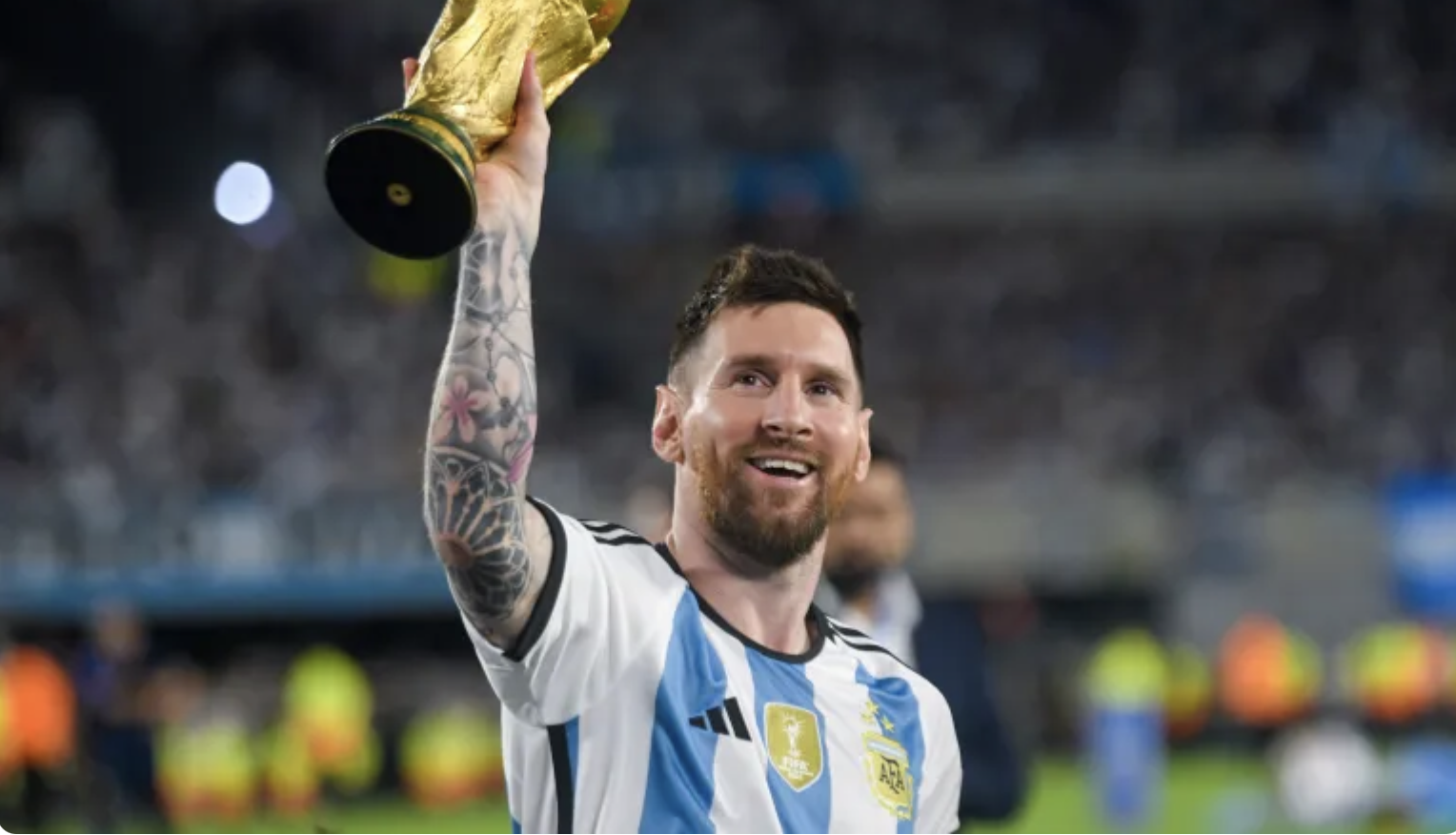
Lionel Messi will lead Argentina's World Cup defence in North America
The countdown is no longer measured in months. It is measured in heartbeats.
As the biggest FIFA World Cup ever prepares to burst into life across the United States, Canada and Mexico, football finds itself standing at a fascinating crossroads. The tournament expands to 48 teams, stretches across 104 matches and 16 venues, and promises a spectacle unlike anything the game has witnessed before. Yet beneath the fireworks and anticipation lies something deeper: a contest between established power and emerging ambition.
And if you listen carefully, there is one sound you will not hear.
Silence Where There Once Was Noise
Few sounds are as synonymous with World Cup history as the buzzing drone that echoed through South Africa in 2010. Yet tournament organisers have now drawn a line under that chapter.
The famous plastic horns have joined a long list of prohibited stadium items as football authorities seek to improve broadcast quality, fan safety and the overall matchday experience. Alongside them are air horns, laser pointers, pyrotechnics and a range of other objects deemed disruptive.
For African supporters, the decision is emotional.
The instrument represented more than noise. It represented identity. It was a soundtrack to Africa’s first World Cup and a symbol of football culture that travelled around the globe.
But tournaments evolve. The challenge now is whether the atmosphere generated by supporters can remain just as powerful without it.
The Favourites: Why Four Giants Lead The Chase
When analysts assess the contenders, four nations consistently sit atop the conversation.
The defending world champions remain formidable. The reigning European champions possess perhaps the most technically complete midfield structure in international football. Another traditional South American giant arrives with a new generation capable of overwhelming opponents in transition. Meanwhile, one European powerhouse enters with arguably the deepest squad in the competition.
Tactically, the margins are fascinating.
The champions of South America continue to thrive through controlled possession and elite game management. They rarely panic, rarely overcommit and often suffocate opponents through midfield superiority.
The European title holders operate differently. Their pressing structure is among the most aggressive in world football. Full-backs invert, midfielders rotate constantly, and opponents frequently find themselves trapped in wide areas.
Then there is the South American attacking machine. Their strength lies not merely in talent but in verticality. They transition from defence to attack in seconds and possess devastating one-versus-one ability across the front line.
The French challenge remains frighteningly simple: overwhelming athleticism, elite pace and extraordinary squad depth.
If this tournament is won through tactical flexibility rather than individual brilliance, those four nations remain the benchmark.
The Teams Nobody Wants To Face
Every World Cup creates surprise packages.
This edition feels particularly vulnerable to shocks because of the expanded format. Twelve groups mean more opportunities for ambitious nations to gather momentum. The best third-placed teams will advance, creating pathways that previously did not exist.
Several nations arrive carrying genuine upset potential.
One North African side enters following a dominant qualification campaign built around defensive discipline and rapid counter-attacking football. Another European nation returns after a lengthy absence armed with exciting young talent capable of unsettling elite opponents. Elsewhere, debutants from Asia arrive carrying the confidence of nations that have already exceeded expectations merely by qualifying.
This is where tournament football becomes dangerous.
Over seven games, talent usually wins.
Over one game, belief can change history.
Africa’s Spotlight Extends Beyond The Pitch
There is another story unfolding around this World Cup, and it belongs to Africa.
The entertainment programme surrounding the tournament will feature some of the continent’s biggest musical stars, highlighting Africa’s growing cultural influence on global football. The connection between African music and football has never been stronger, and organisers clearly understand the value of that relationship.
For African supporters, representation matters.
Not just on team sheets.
Not just in stadiums.
But across the entire tournament experience.
What GameDayBuzz Users Should Watch
If you’re looking for prediction angles, focus on three areas.
First, watch midfield battles. International tournaments are rarely decided by forwards alone. Control of central areas often determines who survives knockout football.
Second, pay attention to transitions. Teams that recover possession and attack quickly tend to thrive when preparation time is limited.
Third, monitor squad depth. A 39-day tournament featuring 104 matches across enormous travel distances will test recovery, rotation and resilience more than any previous World Cup.
My view?
The eventual champion will likely come from the established elite. The quality gap remains significant.
But this tournament feels ripe for a breakthrough semi-finalist. One nation outside the traditional power structure is going to capture imaginations.
That is the beauty of the World Cup.
Every four years, certainty arrives dressed as confidence.
And every four years, football reminds us that certainty is often the first casualty.
The stage is set.
The favourites are ready.
The outsiders are dreaming.
And the biggest World Cup in history is about to begin.