Egypt’s World Cup exit to Argentina leaves officiating under the fiercest spotlight yet
08 Jul, 2026
Egypt’s World Cup exit to Argentina leaves officiating under the fiercest spotlight yet
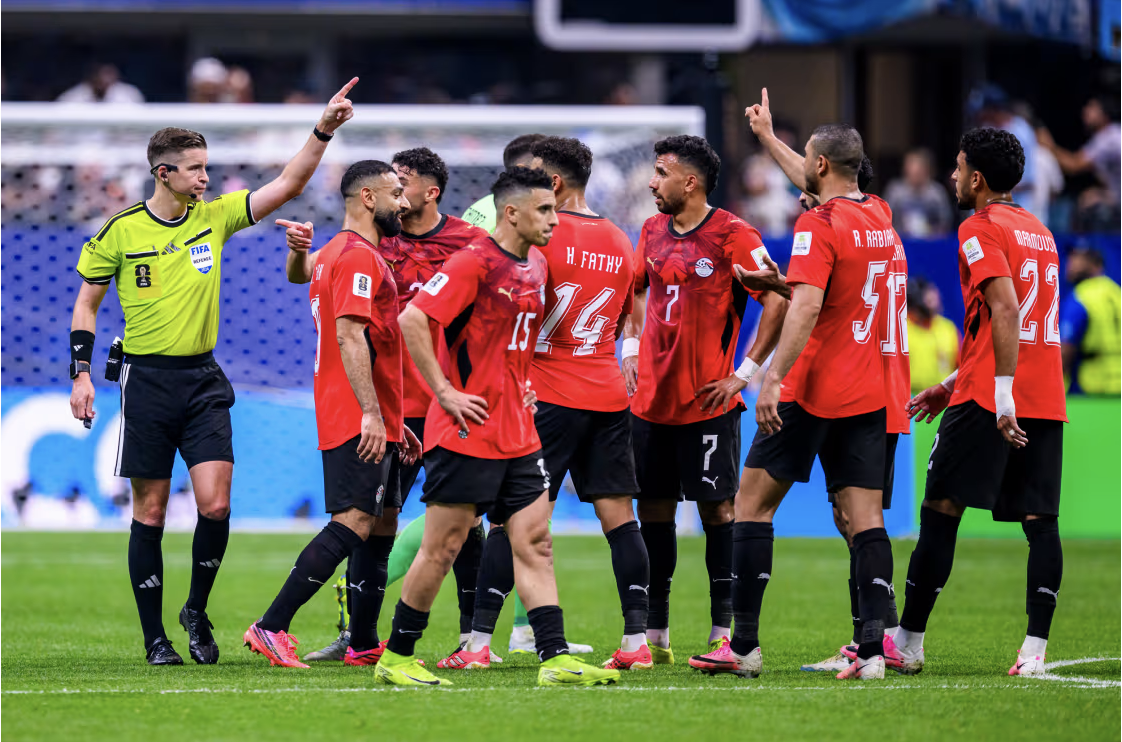
The biggest World Cup story on Wednesday, 8 July 2026 is not simply that Argentina survived. It is the way they survived, and the storm that has followed. Argentina came from 2-0 down to beat Egypt 3-2 in the round of 16 on Tuesday, 7 July at Atlanta Stadium, with Lionel Messi and Enzo Fernandez dragging the defending champions into the quarter-finals. By the final whistle, however, the conversation had shifted from comeback to controversy.
On the raw numbers alone, Egypt had built a case strong enough to believe. Yasser Ibrahim put the Pharaohs ahead in the 15th minute and Mostafa Zico made it 2-0 in the 67th after an earlier Zico strike had already been ruled out following a video review. Argentina did not score until the 79th minute, when Cristian Romero started the rally, before Messi levelled in the 83rd and Fernandez completed the turnaround in stoppage time. For more than an hour, Egypt were not hanging on; they were leading the world champions and forcing them into errors.
The statistical outline only deepens the sense of grievance in Cairo. Messi missed a first-half penalty, saved by Mostafa Shobeir, and still finished the night with the equaliser that kept Argentina alive. That goal was his eighth of the tournament and his 21st at World Cup level, extending his all-time competition scoring record. Argentina have now come through successive knockout matches by a single goal after being stretched to extra time by Cabo Verde and then pushed to the brink by Egypt. The holders are advancing, but not with control. They are advancing through moments.
That is why the officiating debate has landed so heavily. Egypt’s anger centres on two late penalty appeals before the move that ended with Fernandez’s winner. The emotional force of those complaints is understandable because the margins were so thin and the swing so violent. A side that looked set for the quarter-finals was suddenly out of the tournament within 13 minutes. In matches of that scale, every non-call becomes part of the result’s afterlife.
Still, the evidence available so far does not conclusively prove systematic bias in favour of Argentina or Messi. It does confirm that Egypt believed key decisions went against them, and that the winning sequence will be dissected long after this tie. That distinction matters. A controversial match is not automatically proof of a tilted competition. Yet the perception problem for FIFA is real, especially when the team benefitting is the reigning champion and the player at the centre of the drama is the tournament’s biggest global draw.
For Egypt, the harder truth is that they had one of the competition’s great shocks in their hands and could not close it out. Their run still stands as a landmark one, having already carried them into the knockout rounds for the first time. For Argentina, the win keeps the title defence alive and sets up a quarter-final against Switzerland. For FIFA, this is now a credibility test as much as a football story. The comeback was extraordinary. The suspicion it has left behind may prove even bigger.