STORM WARNING: WHEN A SEMI-FINAL BECOMES A STATEMENT
05 Jun, 2026
STORM WARNING: WHEN A SEMI-FINAL BECOMES A STATEMENT
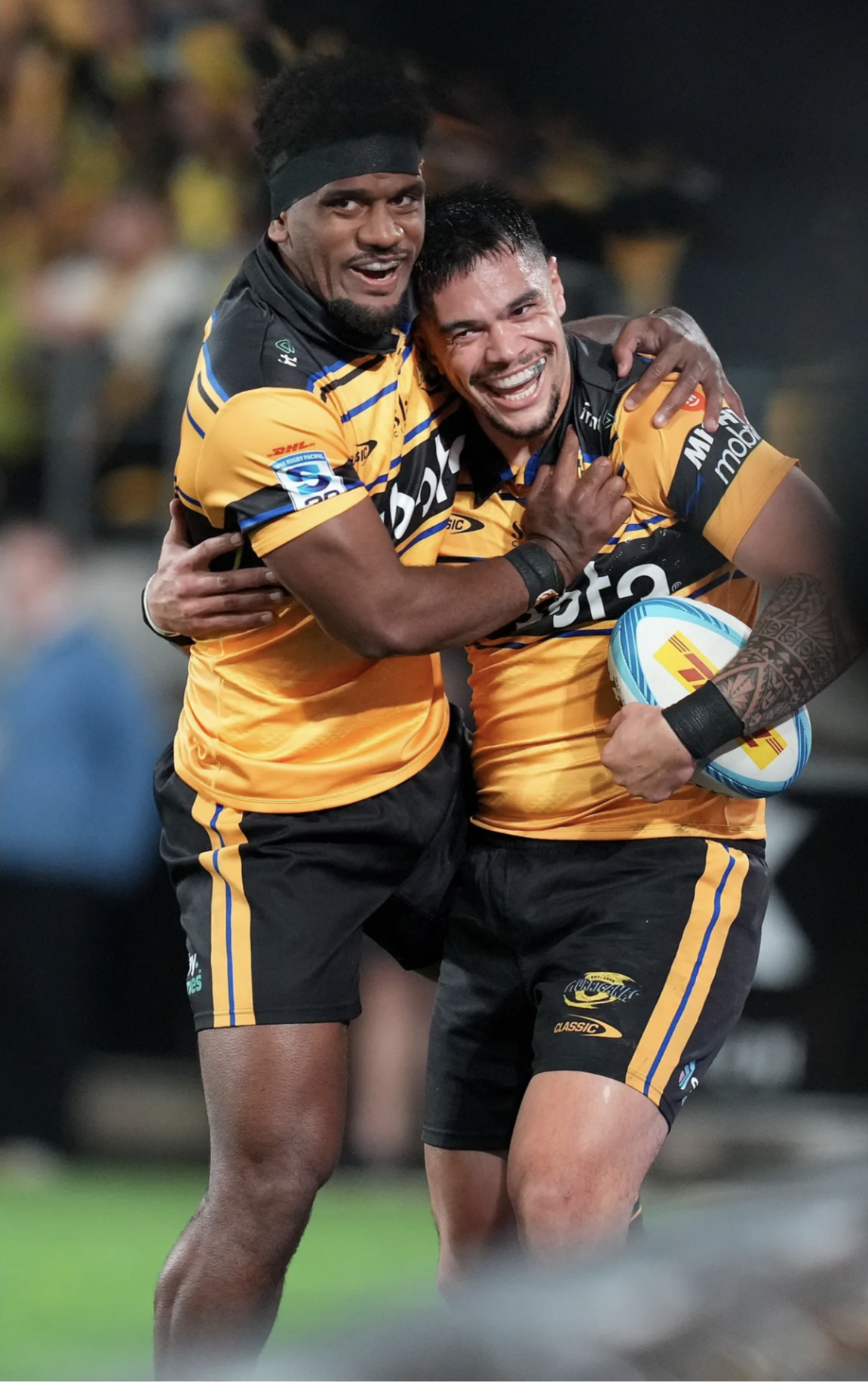
There are playoff victories, and then there are playoff declarations.
What unfolded this weekend in Super Rugby Pacific belonged firmly in the second category.
A contest expected to be a bruising arm-wrestle between two seasoned postseason outfits instead became a masterclass in precision, pace and ruthless execution. By the final whistle, one side had not merely secured passage to a home semi-final; they had delivered the largest playoff victory in the competition’s history and sent a chilling warning to every remaining challenger.
The Match Was Won Before The Ball Reached The Wings
The scoreboard will grab the headlines.
The real story sat underneath it.
This was a lesson in how modern Super Rugby is controlled through speed of recycle, defensive line integrity and territorial pressure.
From the opening exchanges, the victors targeted the collision zone. Their cleaners arrived earlier, their support lines were sharper and their ability to generate lightning-quick ruck ball consistently placed defenders under stress.
That matters because elite attacking rugby is rarely about miracle passes.
It is about forcing defenders to make decisions while moving backwards.
Once that happened, the floodgates opened.
The midfield repeatedly won the gain line, creating opportunities for outside backs to attack fractured defensive systems. Every time the opposition compressed to stop the direct threat, width appeared. Every time they drifted wider, runners punched holes through the middle.
That’s not luck.
That’s coaching.
And that’s why the margin became historic.
When Pressure Turns Into Panic
The losing side entered the contest carrying a reputation built on resilience and structure.
For much of the season, they had thrived through disciplined phase play, strong set-piece foundations and an ability to remain composed during tight finishes.
But playoff rugby exposes weaknesses brutally.
Once they fell behind, their game management deteriorated.
The kicking game became reactive rather than strategic. Defensive spacing widened. Support runners arrived half a second late. At this level, half a second might as well be a minute.
What followed was a classic example of game-state pressure.
Teams chasing large deficits often abandon the very systems that brought them success. The result is usually more errors, more turnovers and more punishment.
That’s exactly what happened.
The numbers tell the story. Multiple unanswered tries, dominant territory and a relentless ability to convert opportunities into points transformed a quarter-final into a procession.
Why The Semi-Final Equation Has Changed
Here’s the important takeaway.
This wasn’t simply a bad day for one side.
It was evidence that the winners have discovered their playoff identity.
Over recent seasons, questions have occasionally been asked about their consistency against fellow title contenders. Those questions now feel outdated.
Their recent form suggests a team peaking precisely when championships are decided.
The balance is particularly impressive.
Their forwards are generating front-foot ball. Their halves are controlling tempo. Their outside backs are finishing clinically. Most importantly, their defence continues to create attacking opportunities through turnovers and counter-attacking transitions.
Championship teams do not rely on one superstar.
They create systems that make everybody dangerous.
This group currently looks very close to that level.
What GameDayBuzz Fans Should Watch Next
The temptation after a record-breaking victory is to assume momentum guarantees future success.
History says otherwise.
Super Rugby playoffs are littered with teams that produced one spectacular performance before being dragged into an entirely different tactical battle the following week.
The challenge now changes.
Opponents will study every phase, every kicking pattern and every attacking shape from this demolition.
Expect future rivals to contest the breakdown more aggressively, slow possession and force longer kicking exchanges.
The question is whether this newly empowered contender can adapt.
My view? They can.
Not because of the scoreline.
Because of how the scoreline was achieved.
This wasn’t built on emotion.
It was built on process.
And when process meets confidence in knockout rugby, trophies often follow.
For GameDayBuzz users looking ahead to the semi-finals, watch the breakdown battle first. Watch the first twenty minutes second.
That’s where championships are usually won.
And after this weekend, one thing feels undeniable: the rest of Super Rugby Pacific has been placed on notice.