The Portugal–DRC and Spain–Cape Verde Lesson: Why World Rugby Must Abandon Its Colonial Playbook for FIFA’s Global Vision
18 Jun, 2026
The Portugal–DRC and Spain–Cape Verde Lesson: Why World Rugby Must Abandon Its Colonial Playbook for FIFA’s Global Vision
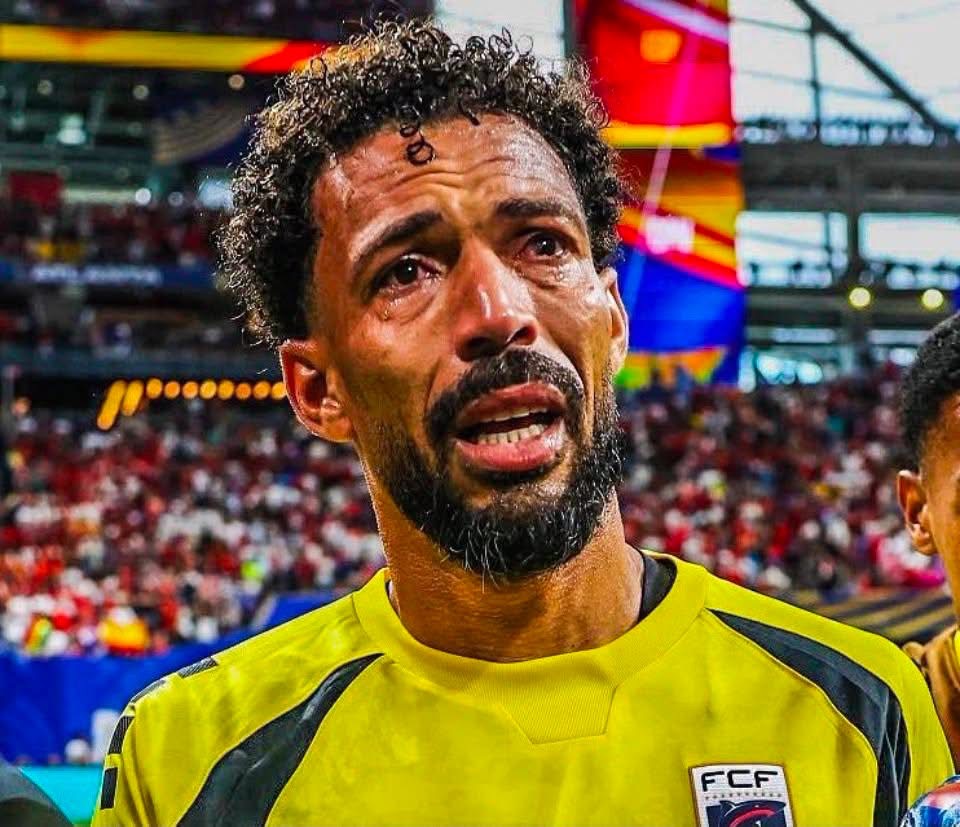
Two 2026 FIFA World Cup drawn games offered moments that for decades, would have been unthinkable. Portugal—European royalty, home to Ronaldo's legacy—drew with the Democratic Republic of Congo. Spain drew with Cape Verde, a tiny island nation that a generation ago was a football afterthought. These are not ceremonial lambs. They are competitive threats, legitimate narratives, and commercial goldmines. Neither qualified by accident. They qualified because FIFA, belatedly and imperfectly, understood that growing the pie benefits everyone—more viewers, more unpredictability, more grassroots investment, and ultimately, more revenue for the entire ecosystem.
Now cast your eyes across the sporting spectrum, and you will find World Rugby—a governing body still mesmerised by the sepia-toned ghosts of the British Empire. While FIFA has democratised the beautiful game, World Rugby has perfected structural apartheid, masquerading as "tradition." The recent elevation of Fiji and Japan to Tier 1 is not a victory; it is a performative crumb from a banquet that Tonga and Samoa cannot even approach. This is colonialism rebranded—not with flags and cannons, but with broadcasting rights, fixture calendars, and centralised voting blocs.
Let us be brutally clear. Fiji, Samoa, and Tonga produce more professional rugby talent per capita than any nation on earth. They are the lifeblood of the global game—the entertainers, the innovators, playing with reckless abandon because they have nothing to lose and everything to prove. Yet while their players fill the starting XVs of Australia, New Zealand, and France, their national unions beg for scraps. They are granted one-off Tests against Tier 1 nations once in a blue moon, usually at neutral venues that extract maximum revenue for the host and minimum investment back into Pasifika grassroots. This is not neglect; it is exploitation—the extraction of human capital without the repatriation of financial capital, the very essence of neocolonial economic theory.
World Rugby’s defense is always the same: "We need to protect the integrity of the Rugby Championship and the Six Nations." Protect what? A closed shop of old money where the same six European nations and three southern hemisphere aristocrats, rotate the same trophies, while the rest of the world is fed one-off friendlies forgotten by Monday? Contrast this with FIFA’s expanded World Cup. The tournament is richer, not poorer, for the inclusion of minnows. A Spain–Cape Verde clash is no longer a foregone conclusion; it is a stage to discover new heroes like Cape Verde’s 40-year-old Josimar Dias-Vozinha. The global fanbase has exploded because fans in Kinshasa, Praia, Tbilisi, and Doha now have a stake in the narrative. They buy jerseys, they watch broadcasts, they inspire children. Rugby, by contrast, is cannibalising its future by confining its "product" to a nostalgic cartel.
The hypocrisy is suffocating. World Rugby finally admits Fiji and Japan to the elite table, yet Samoa and Tonga—who have beaten Tier 1 nations in recent World Cups—remain in the doldrums. Why? Because they lack lucrative television markets. That is the new colonialism: economic viability over sporting merit. The Global North dictates terms to the Global South, not with gunboats, but with broadcast schedules and ranking algorithms that deliberately starve tier-two nations of the regular, high-intensity fixtures required to climb the ladder.
If World Rugby had even a fraction of FIFA’s strategic foresight, they would mandate that every Tier 1 nation play a minimum of three away Tests in the Pasifika or emerging African nations per four-year cycle, with gate revenue shared 50-50. They would scrap the Nations Cup proposal designed to entrench the status quo, and instead adopt genuine promotion-relegation for the Six Nations and Rugby Championship. They would redirect World Cup surplus—a tournament that survives on the passion of Pasifika and African fans—into high-performance academies in Nuku'alofa, Apia, and Kenyan outposts, rather than into the bloated administrative coffers of London and Dublin.
FIFA is far from perfect; corruption has stained its history. But on the fundamental question of growth, FIFA has embraced a multilateral future. The Portugal–DRC and Spain–Cape Verde fixtures are harbingers of football’s vibrant, chaotic, inclusive tomorrow. Rugby’s equivalent—a potential Samoa vs. England or Tonga vs. France pool clash—is treated by World Rugby as a risk to be managed, not an opportunity to be celebrated. Until World Rugby unshackles itself from this institutionalised prejudice, until it redistributes wealth and fixtures with the same vigour it protects its own, it will remain not a world sport, but a colonial relic—beautifully played, morally bankrupt, commercially stagnant.
The world has moved on. Rugby has not. And that silence from the Pasifika and the broader Global South is not acceptance; it is the sound of a game slowly suffocating its own soul.