Springboks lean on depth as Rugby’s Greatest Rivalry tour sharpens focus on SA’s next wave
28 Jul, 2026
Springboks lean on depth as Rugby’s Greatest Rivalry tour sharpens focus on SA’s next wave
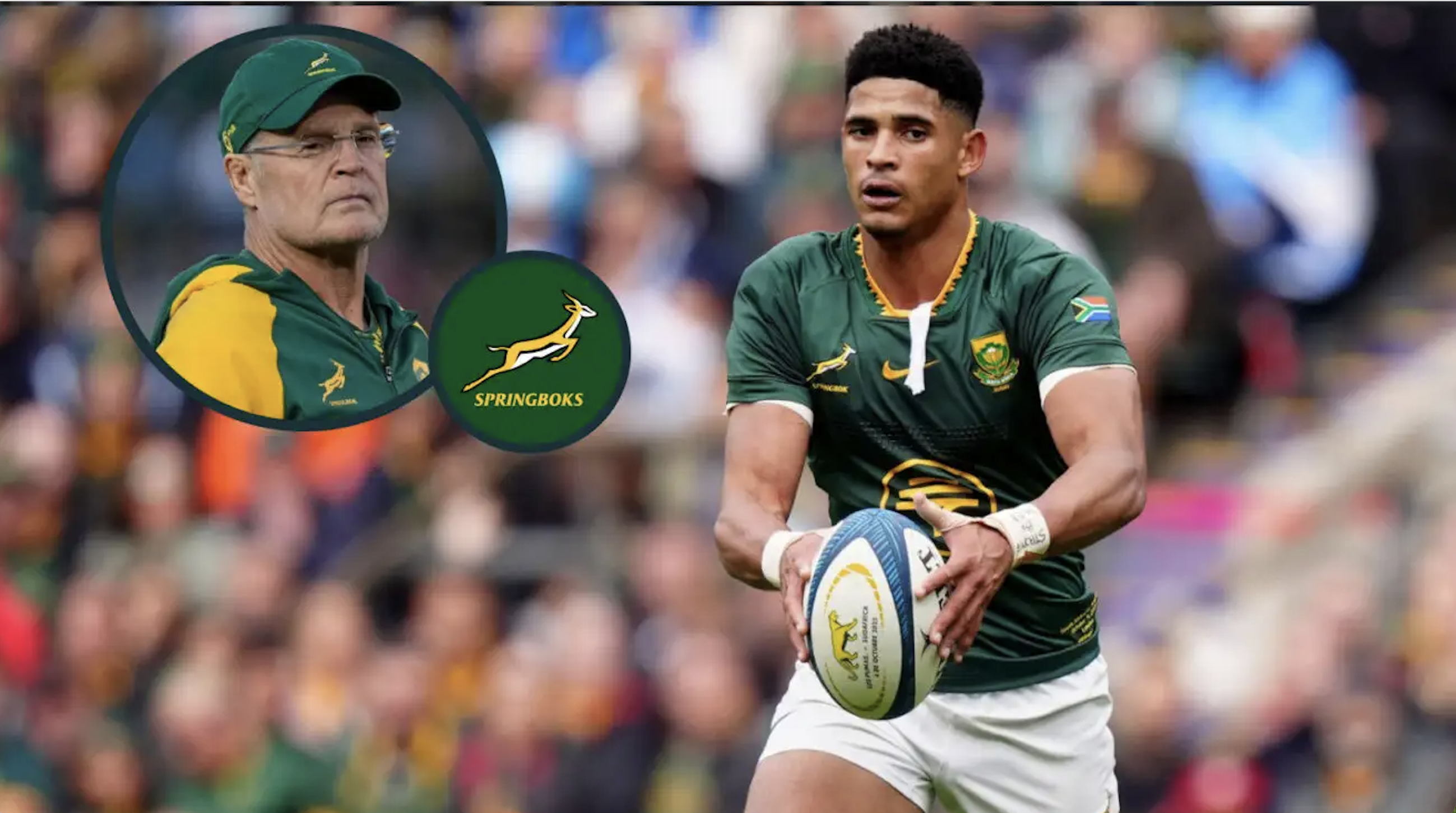
South Africa’s build-up to Rugby’s Greatest Rivalry tour has quickly become a test not only of frontline quality, but of how much depth Rassie Erasmus can trust when the schedule tightens. With a 43-man group called together on 22 July for the trip to Argentina on 8 August and the four-match series against New Zealand that follows, the Springboks are shaping the next phase of their season around rotation, internal competition and succession planning.
The timing matters. South Africa closed the opening block of the 2026 Nations Championship unbeaten after defeating England 45-21 at Ellis Park, Scotland 42-28 at Loftus Versfeld and Wales 43-0 in Durban. That run extended the Springboks’ winning streak to 11 Tests and kept the world’s top-ranked side moving with momentum into the most demanding stretch of their calendar.
Rugby’s Greatest Rivalry will then bring New Zealand to South Africa for a full-scale tour starting on 7 August, with franchise matches against the Stormers, Sharks, Bulls and Lions before four Tests against the Springboks at Ellis Park on 22 August, DHL Stadium on 29 August, FNB Stadium on 5 September and M&T Bank Stadium in Baltimore on 12 September. It will be the All Blacks’ first full tour of South Africa since 1996, adding extra historical weight to a series already being treated as one of the defining events of the season.
For South Africa, the central story is squad depth. Erasmus has spent much of 2026 widening the selection net, first through a 49-player alignment camp in March, then a 40-man camp in May, and later a 51-man training squad in June that included 21 uncapped players. The latest 43-man selection for the Argentina Test and the New Zealand series underlines that the coaching staff are still building combinations rather than locking themselves into a narrow core.
That creates space for potential breakout performers. Forwards such as Phepsi Buthelezi, Carlu Sadie, Sibabalwe Mahashe and Zekhethelo Siyaya have all been brought into the wider system during the year, while the pathway beneath the senior side continues to accelerate after the Junior Springboks won the 2026 U20 Rugby Championship and then defended their world title by beating France 16-5 in Georgia. That success has reinforced the sense that South Africa’s next line is arriving with real substance.
The immediate challenge, though, is more exacting than developmental. New Zealand head into the tour unbeaten in the inaugural Nations Championship after beating France, Italy and Ireland, and will name a 44-man touring squad. South Africa’s advantage may lie in familiarity with local conditions and a deeper pool conditioned across multiple camps, but the coming series will reveal whether that depth can stand up when the Springboks’ greatest rival forces every selection call into sharper relief.