Fortress, Firepower and Fine Margins: Why All Blacks v Ireland Could Define Rugby’s New Era
16 Jul, 2026
Fortress, Firepower and Fine Margins: Why All Blacks v Ireland Could Define Rugby’s New Era
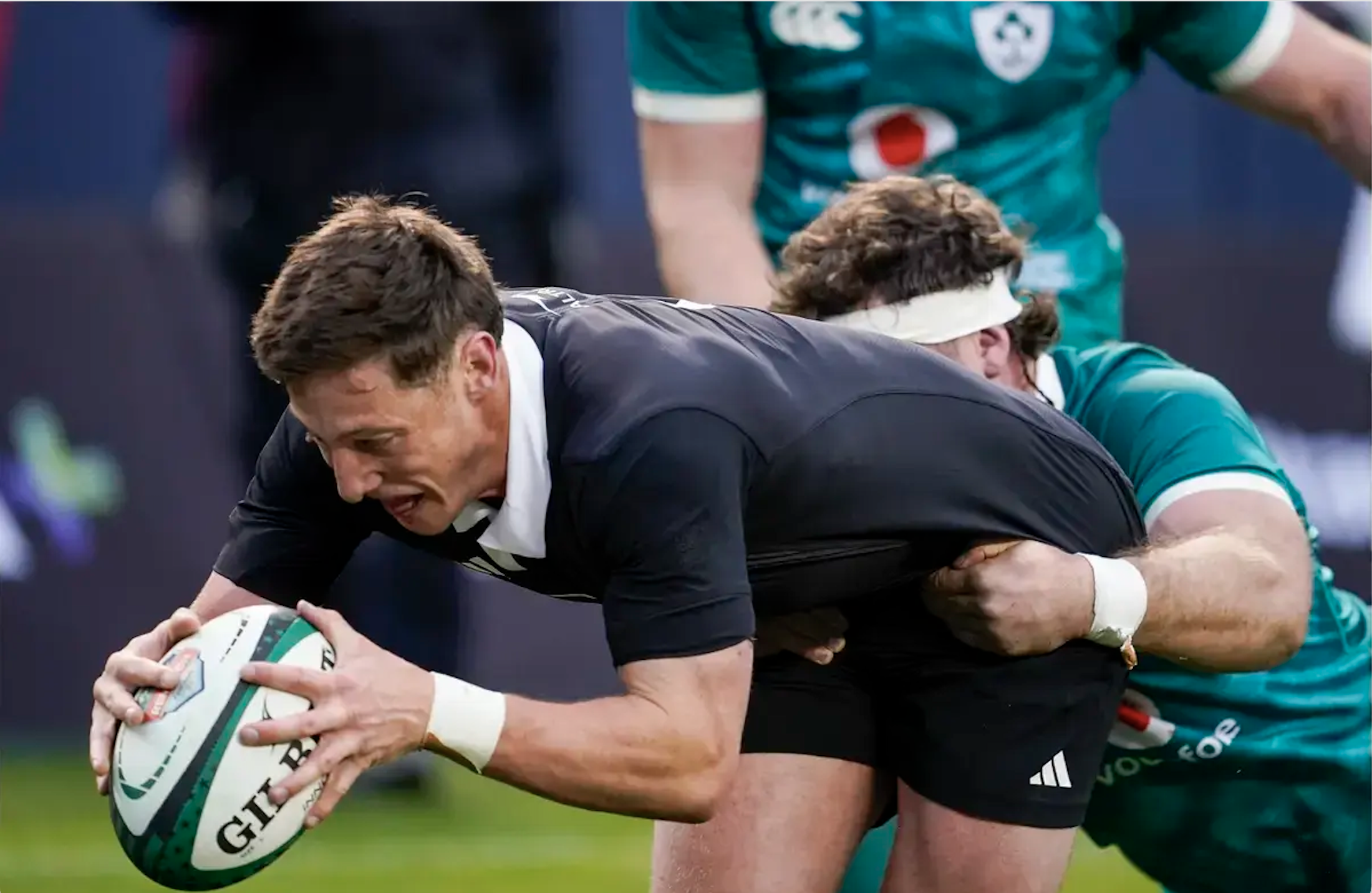
There are Test matches, and then there are measuring-stick Test matches.
New Zealand versus Ireland at Eden Park falls firmly into the second category. It is the headline act of the third round of the inaugural Nations Championship, featuring two unbeaten sides with genuine title ambitions and, perhaps more importantly, two teams already thinking beyond July toward the 2027 Rugby World Cup.
On paper, both coaches have shown their hand.
Andy Farrell has recalled the bulk of his frontline talent after rotating through the opening rounds, making nine changes to the side that defeated Japan. Dan Sheehan captains a pack reinforced by Tadhg Furlong, Joe McCarthy and James Ryan, while Jamison Gibson-Park returns to orchestrate the attack alongside Sam Prendergast. Garry Ringrose also returns to marshal the midfield, with Bundee Aki held back as an explosive option from the bench.
Across the halfway line, Dave Rennie has resisted wholesale changes but introduced subtle tactical wrinkles. The most intriguing is Tupou Vaa’i’s move from lock to blindside flanker, giving New Zealand greater lineout flexibility without sacrificing mobility around the breakdown. Josh Moorby also earns another opportunity after impressing with his work rate and finishing ability.
The Real Contest Lies Up Front
Casual supporters will inevitably focus on Beauden Barrett’s creativity or Ireland’s polished backline.
That would be missing where this Test is most likely to be won.
Ireland’s entire attacking framework begins with rapid ruck ball generated by Gibson-Park. When Ireland consistently produce sub-three-second rucks, Prendergast can attack defensive shoulders before the line is properly organised.
New Zealand know that.
Expect the All Blacks to attack the breakdown differently from previous weeks. Rather than committing numbers indiscriminately, look for Vaa’i, Ardie Savea and the loose forwards to target selective counter-rucks designed to slow Ireland’s tempo rather than steal possession outright.
That tiny delay changes everything.
Instead of attacking fractured defensive lines, Ireland are suddenly facing a settled black wall.
Conversely, New Zealand’s attacking blueprint is built around width.
The All Blacks are comfortable stretching teams from touchline to touchline before attacking the inside shoulders created by compressed defenders. Barrett’s ability to identify those moments remains among rugby’s elite strengths.
Ireland therefore face a balancing act. Press too aggressively and New Zealand expose space behind the line. Sit too deep and Barrett controls territory with his kicking game.
Those are uncomfortable decisions to make for 80 minutes.
Eden Park Is More Than A Stadium
Statistics matter because they create pressure before kickoff.
New Zealand have not lost a Test at Eden Park since 1994, compiling an extraordinary 52-match unbeaten streak at the Auckland fortress. Ireland know they are not simply trying to beat the All Blacks; they are attempting to overcome more than three decades of accumulated confidence.
The broader rivalry has become increasingly competitive despite New Zealand’s historical dominance.
The nations have met 39 times, with the All Blacks winning 33, Ireland five and one ending in a draw. Yet recent history tells a more balanced story. Ireland have transformed from respectful challengers into genuine contenders capable of dictating terms for long stretches, even if New Zealand claimed the most recent meeting 26-13 in Chicago last November.
That evolution explains why this fixture feels different.
Neither side enters believing survival is enough.
Both expect victory.
Looking Beyond Saturday
The Nations Championship may be the immediate prize, but coaches rarely think only one week ahead.
For New Zealand, this is another opportunity to refine combinations before the highly anticipated “Greatest Rivalry” series against South Africa later this year—a sequence of Tests expected to provide perhaps the sternest examination in world rugby.
Ireland, meanwhile, continue building squad depth without sacrificing competitiveness. Farrell’s willingness to rotate heavily before restoring his strongest combinations reflects confidence in the broader squad while ensuring his frontline players peak for defining occasions.
That balance could prove invaluable over the longer championship campaign.
GameDayBuzz Watch
If you’re following this clash inside GameDayBuzz, three moments deserve particular attention:
- First 20 minutes: Can Ireland establish rapid ruck speed, or will New Zealand disrupt possession early?
- Territory battle: Watch which fly-half controls the kicking exchanges and forces the opposition into exits from deep.
- Bench impact: Few international matches swing more dramatically after 60 minutes than All Blacks-Ireland contests.
Prediction
Ireland possess the structure to frustrate virtually any opponent.
New Zealand possess something few teams can replicate: the ability to accelerate a Test match from controlled chess into organised chaos.
At Eden Park, with history, home advantage and tactical flexibility on their side, that edge should prove decisive.
Prediction: All Blacks 29-23 Ireland.