All Blacks Expose Wallabies as World Cup Warning Bells Ring
17 Oct, 2026
All Blacks Expose Wallabies as World Cup Warning Bells Ring
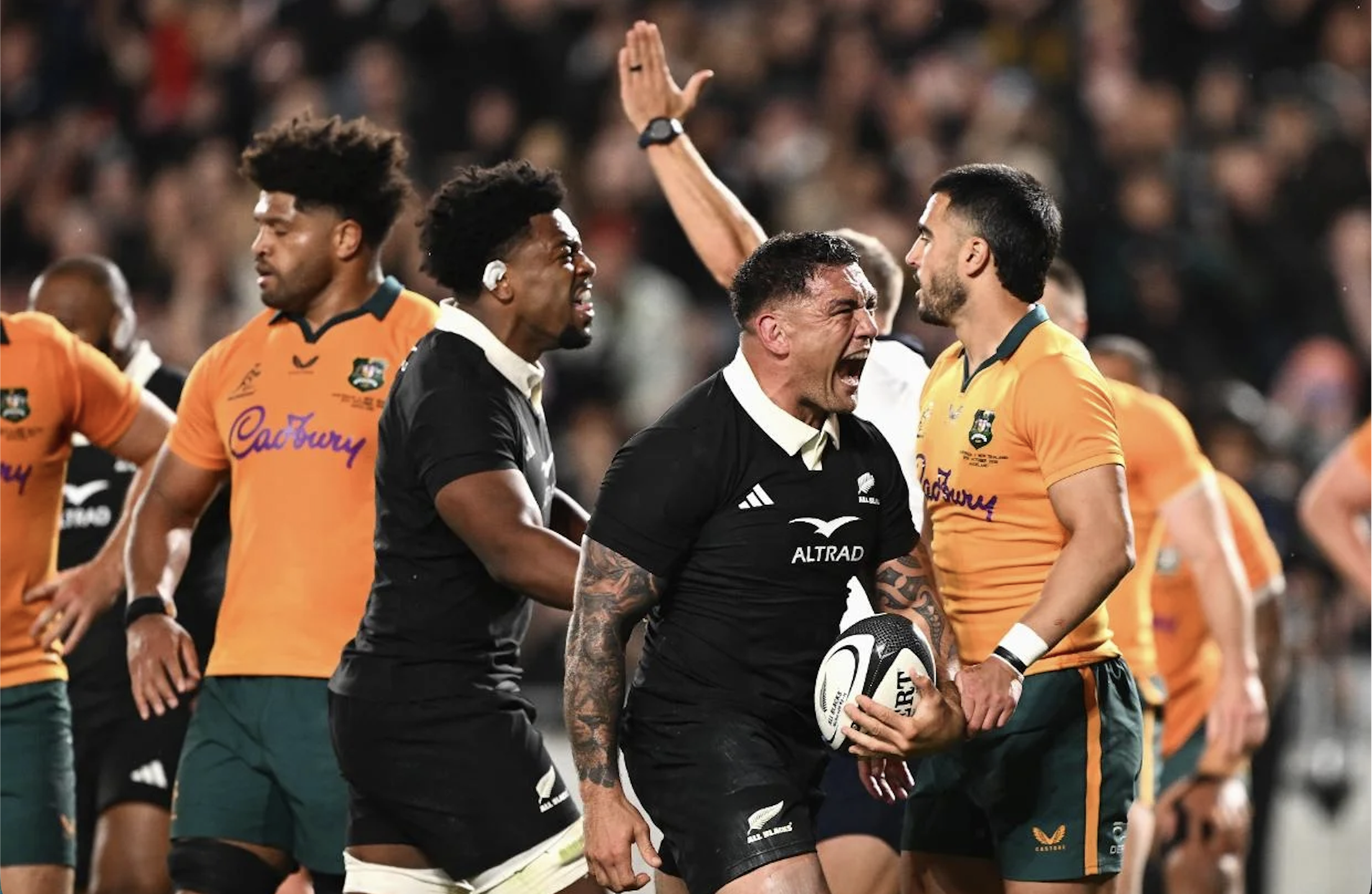
There are defeats, there are humiliations, and then there are afternoons when your fiercest rival takes your game plan apart, examines the pieces and throws them back at you.
Australia's 43–21 demolition by New Zealand in Sydney belonged firmly in that third category.
Seven All Blacks tries. A staggering 36–7 half-time advantage. A 13th consecutive victory over the Wallabies. And another Bledisloe Cup campaign ending with Australian rugby searching for answers.
Forget the respectable-looking second-half scoreline. This contest was effectively over before the oranges came out.
The breakdown: Where Australia lost the Test
Here's the tactical reality: New Zealand didn't simply play faster. They made Australia defend faster than Australia could reorganise.
The opening exchanges told the story.
Australia constructed a 14-phase assault deep inside New Zealand territory. Peter Lakai forced the turnover. The All Blacks then produced 15 phases of their own, moving downfield before Josh Moorby crossed in the 11th minute.
That's the difference between possession and precision.
The Wallabies worked desperately hard to create opportunities. New Zealand converted theirs.
Damian McKenzie's distribution repeatedly challenged Australia's defensive alignment. His ability to move the ball before defenders could reset created space for Lakai, Beauden Barrett and Rieko Ioane.
And when New Zealand's forwards carried directly, the Wallabies were forced to narrow their defensive shape. Suddenly the outside channels became vulnerable.
This wasn't rugby's equivalent of throwing punches and hoping something landed. It was calculated manipulation of defensive space.
Peter Lakai: The forward who played like a back
Lakai was outstanding.
His turnover halted Australia's early attacking momentum. His powerful running created Barrett's first try. Three minutes later, he crossed himself.
But the most revealing aspect wasn't his scoring contribution. It was his positioning.
Lakai repeatedly appeared in attacking support channels, linking forward momentum with the backline's finishing speed.
Alongside Wallace Sititi, he gave New Zealand a formidable combination of physicality and mobility.
Sititi's try from the base of a scrum reinforced another uncomfortable truth for Australia: the All Blacks could hurt them through structured forward play just as effectively as through expansive attack.
And Moorby's two tries demonstrated what happens when defenders hesitate against confident finishers.
Beauden Barrett: Class doesn't have an expiry date
Two tries, including a 70-metre intercept before half-time, and a reminder that rugby intelligence remains priceless.
Barrett's 47th Test try came during a performance that combined attacking instinct with excellent defensive anticipation.
His positioning at full-back gave New Zealand another attacking decision-maker behind McKenzie.
When both men identify the same defensive weakness, opponents face an awful choice: rush forward and risk being beaten outside, or hold their shape and concede attacking momentum.
Australia repeatedly found itself trapped between those options.
The Wallabies' World Cup problem
There were positives. Declan Meredith showed attacking imagination. Tom Wright, Jeremy Williams and Filipo Daugunu scored Australia's three tries.
But let's not confuse individual brilliance with collective competence.
Australia's biggest failure was converting promising attacking positions into points. Handling errors, breakdown turnovers and poor decisions handed New Zealand opportunities to counterattack.
The Wallabies also conceded six first-half tries.
With the 2027 Rugby World Cup approaching on Australian soil, that's deeply concerning.
Coach Les Kiss now faces a serious challenge: building a team capable of controlling territory, protecting possession and maintaining defensive discipline against elite opposition.
Passion isn't the missing ingredient. Execution is.
And what about the Springboks?
Here's where things become interesting.
New Zealand have responded to their 3–1 series defeat against South Africa by dismantling Australia twice.
But beating the Wallabies and beating the Springboks are fundamentally different assignments.
South Africa's physical contest at the breakdown, defensive pressure and ability to disrupt attacking rhythm present a much sterner examination of McKenzie's playmaking freedom.
Can Lakai and Sititi generate the same momentum against the Springbok pack? Can New Zealand maintain its attacking tempo when opponents consistently slow possession?
Those are the questions that matter.
New Zealand have rediscovered their attacking swagger. Whether they've rediscovered the resilience required to beat the world's strongest opposition remains unresolved.
For Australia, the questions are considerably more uncomfortable.
The Bledisloe Cup is gone. The World Cup is coming. And right now, the gap between ambition and performance looks enormous.
For GameDayBuzz Africa fans, the next fascinating prediction isn't simply who wins New Zealand's next Test. It's whether this breathtaking attacking form survives against a defence that refuses to retreat.